
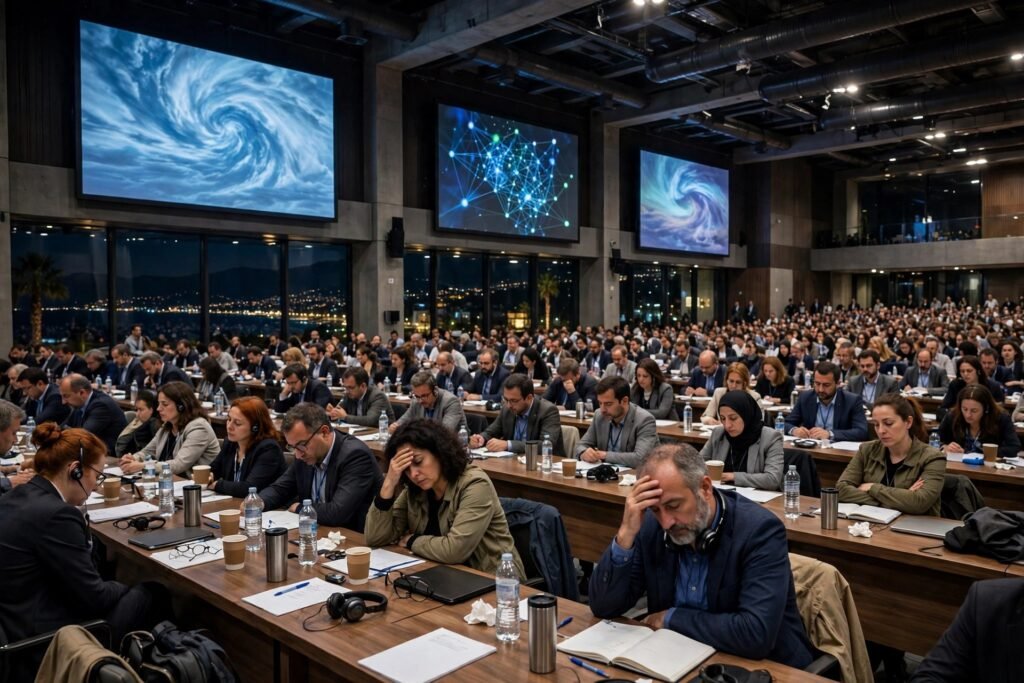
COP31 climate talks go into overtime as fossil fuels row blocks final deal in Antalya
Climate negotiators in Antalya will work an extra day in an attempt to reach a final agreement on tackling global warming, after two weeks of talks ran past their scheduled finish on Friday without a deal.
The summit, known as COP31, was supposed to close on Friday evening. Instead, delegates agreed to extend the talks into Saturday, with the summit’s president, Turkish Environment Minister Murat Kurum, promising a third version of the final document on Saturday morning after overnight negotiations. “We are close to the finish line but not there yet,” Kurum told delegates during a late-night session.
A draft that never mentions fossil fuels
The sticking point is a draft agreement published on Thursday that makes no mention at all of fossil fuels. It drops the commitment countries made three years ago in Dubai to move away from coal, oil and gas, and it removed a proposed $120 billion annual target for finance to help developing countries adapt to climate change.
What the draft does keep is a push for clean energy and electrification, including a call for electricity to supply 35 percent of world energy use by 2035, up from roughly a fifth today. It also calls for carbon capture and storage on a huge scale — up to 2.5 billion tonnes of carbon dioxide a year by 2035 — a target experts say is technically unproven and could be used to justify keeping fossil fuel plants running. The text acknowledges that the world is on course to overshoot the 1.5°C warming limit set in Paris in 2015, yet the words that would commit countries to moving away from the fuels driving that warming have disappeared.
A coalition pushes back
The draft drew strong condemnation on Friday from activists and a group of countries that do not usually negotiate together. Led by France and Panama, ministers and representatives from Belgium, Côte d’Ivoire, Finland, Greece, Guatemala, Spain, Sweden and Vanuatu stood side by side to demand a stronger deal, setting out six priorities including an explicit transition away from fossil fuels, fair climate finance from the biggest polluters, and clean electricity from renewable sources.
Panama has warned it could block the final text unless its demands are met, and a coalition of around 20 to 30 states has pressed for the fossil fuel language to be restored. Outside the venue on Friday morning, activists held up black signs spelling out “shame”, and during a late-night session delegates passed a protest banner reading “failure” while a demonstrator interrupted Kurum, shouting: “You are killing the future, you are killing the future.”
Other issues still dividing the room include the detailed calls for carbon capture and storage, the amount of adaptation finance for poor countries, and Europe’s carbon border tariff on imported goods, which some developing countries see as an unfair trade barrier.
Why this summit matters
This year’s talks came with urgent warnings that the planet is sure to breach the 1.5°C goal. October 2026 was 1.8°C warmer than the mid-1800s, according to Berkeley Earth, and the summit heard that progress has stalled for the past five years even as disasters grow more devastating — this year’s heatwaves in Europe and flooding in Nepal among them.
For countries like Pakistan, which face floods, heatwaves and smog from a changing climate, the argument over finance matters as much as the words. The draft reaffirms a goal of tripling adaptation funding by 2035, but leaves the crucial question of how that increase is counted for further discussion, and developing countries warn that promised money remains vague or undelivered.
What happens next
Negotiators will work through Saturday on the third draft, and recent summits have regularly run more than 24 hours past their deadlines. Hopes are slim that the extra day will produce concrete plans to drastically cut fossil fuel use. Next year’s climate summit is already scheduled for Addis Ababa, Ethiopia, in November 2027 — and the question hanging over Antalya is whether this one ends with a deal worth the name, or with the key decisions put off for another year.
اردو خلاصہ
ترکی کے شہر انطالیہ میں جاری کوپ 31 موسمیاتی مذاکرات مقررہ وقت پر ختم نہ ہو سکے اور مذاکرات کو ہفتے تک بڑھا دیا گیا ہے۔ جمعرات کو جاری کیے گئے مسودے میں جیواشم ایندھن کا کوئی ذکر نہیں، جس پر فرانس اور پاناما کی قیادت میں کئی ملکوں نے سخت اعتراض کیا ہے۔ صدر اجلاس مرات کورم نے ہفتے کی صبح مسودے کا تیسرا ورژن پیش کرنے کا وعدہ کیا ہے۔ کارکنوں نے اجلاس کے باہر “شرم” کے نعرے لگائے اور ایک مظاہرین نے اجلاس میں خلل ڈالتے ہوئے کہا کہ “تم مستقبل کو مار رہے ہو”۔
Sources: Associated Press, 21 Nov 2026; UN News, 20 Nov 2026; Reuters, 19 Nov 2026; Le Monde, 20 Nov 2026.
Should climate summits keep meeting if the big promises on fossil fuels keep getting weaker? What would you change about COP31?